

A member who joins today may draw a pension in the 2060s
The climate and sustainability risks in a scheme's portfolio play out over exactly that horizon. IFRS S1 and S2 ask trustees to show how they identify those risks, manage them and measure progress.
What the report covers
43 disclosures and metrics from the RBA's draft ESG Guidance Note, grouped under the four IFRS pillars. Each one comes with guidance on what to disclose and where the data comes from.
- Governance
- How trustees oversee sustainability, the skills they bring, and how they hold service providers to account.
- 5 disclosures, 6 metrics
- Strategy
- The risks and opportunities that matter to the scheme, and how they shape its investment approach.
- 4 disclosures, 4 metrics
- Risk Management
- How those risks are identified, assessed and written into the scheme's risk register.
- 2 disclosures, 6 metrics
- Metrics & Targets
- Financed emissions, climate exposure, and the targets the board sets and tracks.
- 3 disclosures, 13 metrics
How a report gets made
Every figure passes the same checks before it reaches the report, and every change is recorded against the person who made it.
- 1
The administrator enters the data
Fund manager and custodian figures are loaded once and shared across schemes by their holdings.
- 2
The ESG champion checks and submits
One named person at the administrator confirms the submission is complete.
- 3
Kenbright reviews
Our ESG analysts return items with comments, or approve them.
- 4
The board approves
Trustees approve the material topics and final disclosures. The signed minutes are uploaded.
- 5
The record is locked
Approved figures and their evidence can no longer be changed.
- 6
The report is produced
A PDF covering all four pillars, stating the board approval date, ready to attach to the annual report.
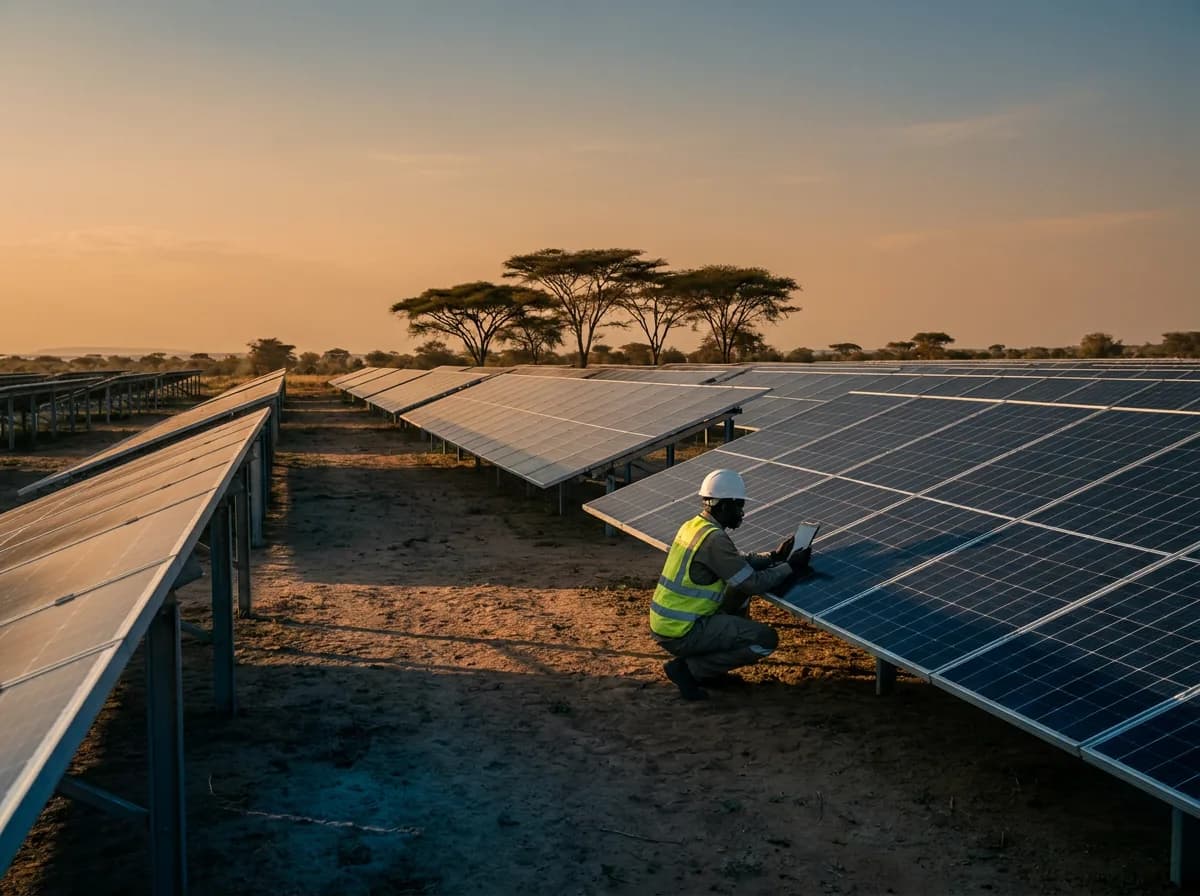
Climate opportunities count too: green bonds, renewable energy and resilient infrastructure.
Materiality comes first
Schemes score 30 topics written for Kenyan pension schemes on likelihood and magnitude. The trustees approve the final list, and it sets what the report must cover.
- Climate 9
- Environment 3
- Social 10
- Governance 8
Sovereign climate and fiscal risk
Climate disasters strain public finances, which can affect the value and liquidity of Government of Kenya securities – typically the largest single exposure in Kenyan pension portfolios.
Statutory contribution changes (NSSF Act 2013)
Higher NSSF Tier I/II rates and contracting-out rules shift contributions between NSSF and occupational schemes.
Member data privacy and cybersecurity
Breaches of member data held by the scheme or administrator create legal liability under the Data Protection Act 2019 and reputational harm.
Sized to your scheme
The guidance expects more from schemes with assets above KES 1 billion. Each scheme sees the expectation that applies to it, item by item.
| Item | Assets above KES 1bn | Assets up to KES 1bn |
|---|---|---|
| Board oversight of ESG | Detailed ToRs for formalised ESG structures | Identify the designated person or committee |
| Climate resilience and scenario analysis | Commission and disclose quantitative scenario analysis | Qualitative resilience statement or pooled-fund analysis |
| Integration into overall risk management | ESG embedded across existing risk categories | Add an 'ESG risk' category to the risk register |

Preparing for your scheme's first report?
Talk to our ESG team about onboarding your schemes before the first reporting period begins.